Wednesday, April 21, 2021

Simon Magus, the Great Interpolation

I have complained many times of the difficulty in finding the truth about the origin and development of Christianity due to the widespread Christian practice of interpolating passages into the witnesses, especially the so-called neutral witnesses such as Seutonius,  Cassius Dio, Josephus, Pliny the Younger, and others. But as I read the church fathers I discovered almost all of those writing before the 4th century had also suffered interpolation. This causes me to be angered, frustrated, and saddened all at once.

But then a few days ago, as I tripped over another Interpolation in Origen, right after finding a rather mindless one in Irenaeus, and Epiphany happened. I realized that I was looking at the matter all wrong. These interpolations are telling us something very important. Of all the subjects concerning Christianity these interpolations seem to cover only a few points of contention. And they spread from one work to another, each reinforcing the other. But why were they done? What was so important about them?

Peter vs Simon Magus, Benozzo Gozzoli (c. 1460s)


Simon Magus, the Root of Heresy:
When gazing at the Gozzoli image to the left, where Simon Magus has gone splat on the pavement in front of Emperor Nero after Peter compels a daemon to release Simon while in flight, I realized there was a reason the Simon story was important. Why the pseudo-Clementine Recognitions and Homilies chose this character to play the role of the lead villain in Peter's tale. And why so many place him at the root of all heresies. So strong was this myth of heresy's origin with Simon that later scribes found it necessary to implant his story in earlier works which had no mention of him.

Thursday, August 1, 2019

Was Muhammad From Petra?

Daniel Gibson makes a compelling case based on the Qibla directions and Islamic descriptions of Muhammad's home city that it was in fact Petra and not today's Mecca. And that the black stone was moved from Petra to Mecca during a respite in the war between the Umayyad rulers and the Abbasid rebels. Mecca was far removed from Damascus and safe from the Umayyads, but Petra was not and easily besieged. The Masjid al-Haram originally was in Petra and all the early mosques built before 740 AD pointed to Petra.

This goes against modern Islamic tradition that states the change in worship direction was from Jerusalem to Mecca. Gibson goes through the evidence and comes to a very different conclusion. I found this fascinating and a good watch. I hope you enjoy it as well.

Wednesday, June 12, 2019

The Battle of the Little John Letters (2 John vs 3 John)

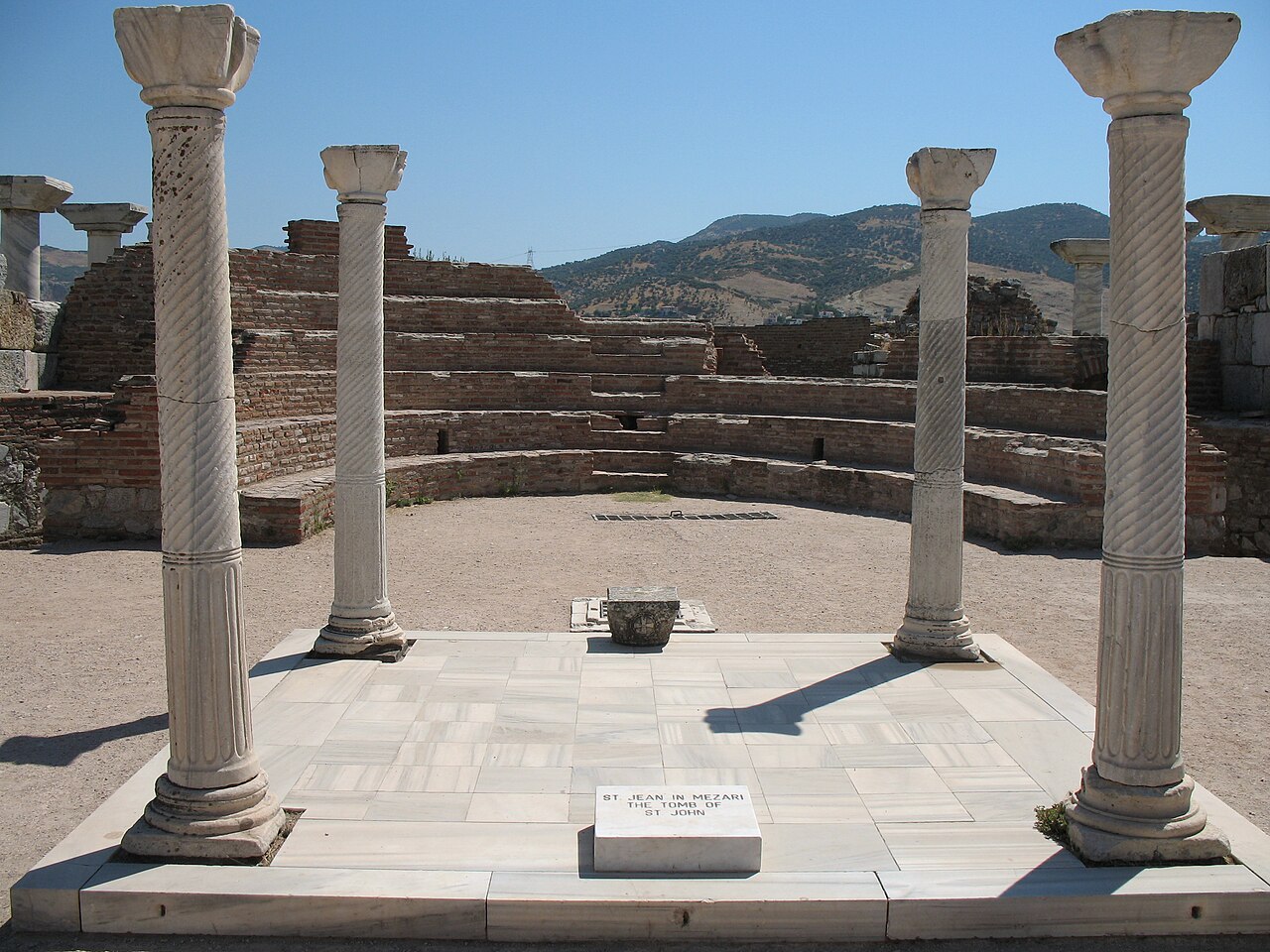
Tomb of John the Apostle in Ephesus (Selçuk, Turkey)
One cannot examine the relationship between 2 John and 3 John without looking at the wider picture of the Apostle whose name was ascribed as author of these two works. And especially the role his legend played in the struggle of the structure of the emerging Church from a rag tag collection of house churches founded by itinerant preachers, which after some significant time grew into more formal organizations with dedicated houses of worship ("synagogues" is the word used in the New Testament).

And no place was this legend more at the fore than Ephesus, where for all the world it appears that John replaced Paul as the patron saint, but only after great factional struggle. The replacement seems to have been not just limited to Ephesus, but probably all of Asia Minor and Anatolia. It is a struggle that left it's mark in several books of the New Testament. [1]

Thursday, March 14, 2019

Against All Assumptions

Three Pillars of Radical Criticism (source unknown)
Today I feel like venting. So I am going to lay out what I see as the six primary assumptions made in New Testament scholarship, none of which should be assumed. Assuming even one of these to be true will lead bad results.

I mean this post to be something of a conversation starter, and I am open to refinement of what I see as being the root of the problem with New Testament studies today.

Saturday, March 9, 2019

Simon Peter and the Cheshire Cat: Was Peter in the "Original" Gospel of John?

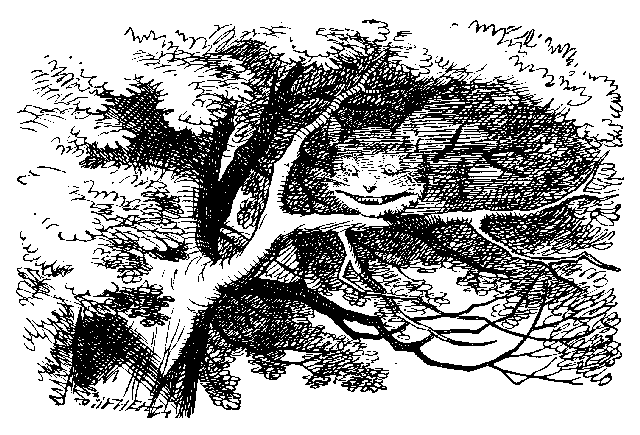
Cheshire Cat fading to smile

... All right,' said the Cat; and this time it vanished quite slowly, beginning with the end of the tail, and ending with the grin, which remained some time after the rest of it had gone.

`Well! I've often seen a cat without a grin,' thought Alice; `but a grin without a cat! It's the most curious thing I ever saw in my life!'

The Cheshire Cat in Lewis Carroll's Alice in Wonderland has the remarkable ability to appear and disappear at will. At one moment he is conversing pleasantly, imparting information Alice already knows, and the next vanishing from sight. Simon Peter performs this very trick before our eyes in the Gospel of John.

Monday, December 17, 2018

The Sudden Appearance of John in the Marcionite Gospel

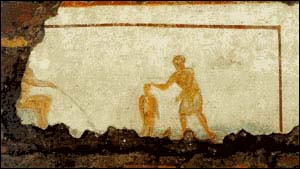
Baptism of Christ, 3rd century, Catacomb of Callixtus
Tertullian (AM 4.11.3) is right to exclaim, Unde autem et Ioannes venit in medium? Subito Christus, subito et Ioannes when John suddenly appears in Marcion's Gospel (Luke 5:33), or rather his disciples, with no back story and no prior introduction. Tertullian compares John's entrance to that of Jesus (Subito Christus), who in Marcion's Gospel enters by descending into Capernaum (Luke 4:31) without warning or introduction. So too here, the mysterious John's disciples are compared to Jesus' disciples. As there is no Baptism in Marcion's Gospel, there is no reason for John to appear. So why is here, and why is he in the Marcionite Gospel at all?

Friday, February 17, 2017

Philemon: My Reading

{\mathfrak {P}} 87: Papyrus 87, recto, Philemon 24-25, c 250 CE
In my reconstruction of the Marcionite version of Philemon I discovered that Tertullian's comment on [1] is not quite the case, at least with respect to the received text. More accurate is his comments about Laodiceans/Ephesians noting, "The heretics hands cut so swiftly, I do not wonder when syllables are lacking, as often whole pages are felled." That is to say, the Marcionite text differs not only in entire paragraphs of material, but a few words here and there, and even a syllable or single character. So it is in Philemon.
the epistle, "To this epistle alone did its brevity avail itself against the falsifying hands of Marcion," [2] And so I have found in this letter, like all the others, a layer of material, albeit smaller in this brief one, with a distinct Catholic flavor. To be fair the Catholic text as Tertullian knew it may not have included some of the material we have today. Only small scraps survived from before the Decian [3] persecution, so we can only guess the content of the text before the mid 3rd century.

Philemon is no different than any other Pauline text. Even in it's brief form it possesses openings, closings, and formulas from additional hands. The Marcionite construction could not assume the content. But a lack of Patristic commentary meant that my efforts had to rely upon the vocabulary,

Tuesday, February 14, 2017

Colossians: The Image of the Invisible God

Colossians, Codex Harleianus 5557 (Minuscule 321)
In the Marcionite Apostolikon Colossians presents an interesting challenge to reconstruct. There is only one relatively brief chapter in Adversus Marcionem (5.19) which addresses the epistle, and that cuts off after chapter 2 of the letter. Beyond that there is little evidence of direct value; Epiphanius gives us only a single reading, and Dialogue Adamantius two extremely dubious passages from chapter 4 (addressed below). [1] However this is not the first reproduction I have undertaken. So I will use what I have learned from those others to gain a better approximation of the Marcionite text, and minimize the free hand eclectic.

The Ephesians Parallel

One of the features of our received text are the parallels between Colossians and Ephesians. But a funny thing happened in working through the reconstruction of Marcionite Laodiceans; all the parallel passages with Colossians vanished - excepting the common Marcionite opening and closings of all the letters in the collection. This should perhaps not be a great surprise, as Winsome Munro, Authority in Paul and Peter, had long identified Ephesians 5;15-18a, 5:21-6:9 and the parallel passages of  Colossians 3:18-4:1, 4:5 as part of the pastoral stratum.

Thursday, November 17, 2016

Matthew, the Perverted Gospel of Galatians

Christ and Peter walk on water, 
Fresovo taken from Matthew 14:28-31 
Dura-Europos (mid 3rd century?)


Most scholars when they hear Marcionite priority assume this means that the first Gospel was Marcion's and all other are dependent upon it. But Paul is still regarded generally as before the Gospels. Both assumptions are wrong. Marcionite priority merely means the first publicly circulating Gospel was the Marcionite. The letters of Paul are in earlier form in Marcion's collection, but their relationship to the Gospel is less clear, as we shall see with Galatians. [1]

The entire purpose of the first Gospel was to spread the word of Christ throughout the Roman Empire. And not surprising it was sectarian, the Marcionite Gospel. Other main sect, the proto-Orthodox, quickly found themselves at a disadvantage in this new game of evangelism, where itinerant teachers (Apostles).

Galatians letter presents a picture if a divided movement. One where Paul finds his authority challenged, with rivals dismiss his teachings, and present a completely different version of Christ. This letter, even more clearly in Marcionite form, presents a scenario where the first teachings of Paul have been overturned. What then is this new Christianity Paul confronts?  How is it that this new and different message has become such a threat that it required such strong a response?

Thursday, June 18, 2015

The Trouble with Sources - Never Salute a Marcionite

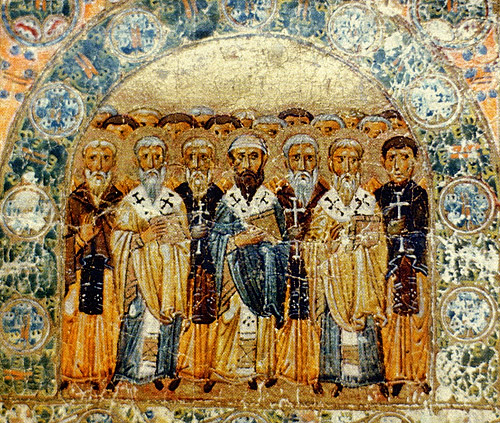
The Church Fathers, an 11th-century
Kievan miniature from Svyatoslav's 
There are three primary sources for the specific content and text of the Marcionite New Testament, Tertullian's Adversus Marcionem, Epiphanius' Panarion book 42, and the first two parts of Dialogue Adamantius. Each has their own problems. Tertullian's use of paraphrase and reference to the Catholic text at times with out notice. Epiphanius is writing much later than the others, and his source text shows signs of having been adjusted here and there toward the Catholic text in the interim.

Yet it is Dialogue Adamantius which is the most difficult. John Clabeaux states (page 12, A Lost Edition of the Letters of Paul),
'The Dial. Adam. is clearly artificial (Adamantius Dialogue xv). There are two claims by the title character (1.5 and 5.22) that he used a Marcionite Apostolikon. These claims, in light of the research of this study, are untenable. The author's claims, even if they are taken seriously, contain two major limitations: They do not speak for every Pauline citation in Dial. Adam.; and (2) when Adamantius says "ἐκ τοῦ αὐτῶν ἀποστολικοῦ" (5.22), he may merely be referring to those letters of Paul which the Marcionites accepted, without implying a reference to the text that is in fact used (catholic or Marcionite).'

Monday, March 30, 2015

John The Baptist: From the Marcionite to the Canonical

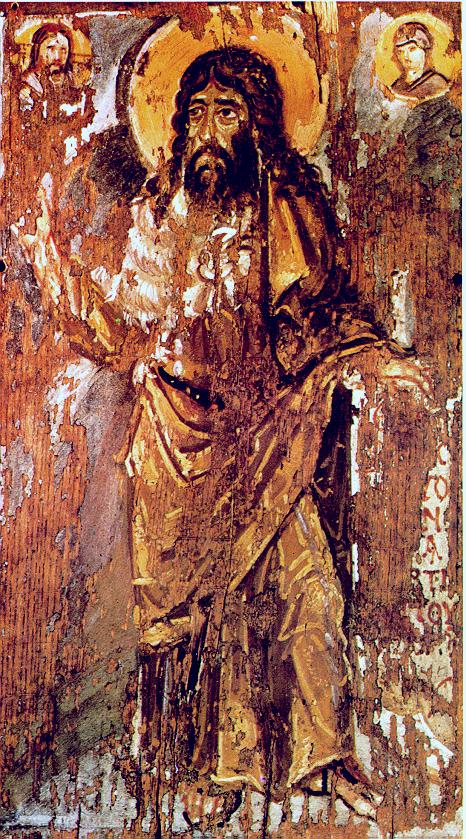
John the Baptist, 6th Century Icon 
St. Catherine at Mt. Sinai

John the Baptist appears in every canonical gospel as well as the Marcionite gospel. He is a key character playing a prominent role in each gospel. But there are subtle differences in the portrayal of his role and how it fits or doesn't in each author's presentation. What these differences are and how they came about is what I hope to answer in this survey of each gospels presentation.

The Evolving Character of John the Baptist

The character of John the Baptist figures prominently in the Gospels. We are all familiar with the scene on the Jordan where John is Baptizing, and then when Jesus is Baptized the sky opens and a voice is heard. And we are familiar with the Malachi and Isaiah references that introduce John and his preaching. But this is information that can get in the way of understanding how the character came to be so prominent in the Gospels and understanding how his role started and evolved.

So for this presentation, I am going ask you to forget everything we think we know about John and start with a fresh reading, as if for the first time. Beginning the Marcionite Gospel, and analyzing only what we find in that Gospel to understand John within the context of that writing. From there we will expand into the other Gospels to see how the character developed.

Friday, June 6, 2014

The Gospel of John: Context of Authorship

John, Book of Kells (800 CE)
The Gospel of John is very different from the Synoptic Gospels in composition and content. But it is also very different in theology, and it is my aim to demonstrate it's dependence and opposition to the Synoptic Gospels, especially Matthew and Mark, and the Catholic theology they espouse. Although I am treading on ground already covered by Joseph Turmel some ninety years ago, and more recently by Roger Parvus,  [1] there is still much to be learned by a comparison between John and the Synoptic  Gospels in Catholic form. To that end I will survey some of the most obvious passages without attempting to splice the layers, with the hope of demonstrating the allegorical meaning the original author intended.

In surveying the content of the Gospel of John today with knowledge of the second century controversies, I am struck by the consistent and blunt repudiation of the Jewish God as the father of Christ, and more generally its opposition against every Jewish Christian theological point we find presented in the rest of the New Testament. It is truly a wonder this book, even with redaction, ever made it into canon.

Thursday, March 27, 2014

Video Hello

Although I have been building this blog up for the last two years, I have only done so with written articles. But today I am going to add a video element, an introduction to my blog that I should have done a year or so ago. The purpose is to put a face on the blog, albeit late at night and unshaven, and give a brief explanation about the current state of the blog.

This comes at an important time in the blog, as I am busily preparing the critical text version of ten letter Marcionite Apostolikon for formal publication. What is up on the website can be considered rough draft form. It is my hope that publishing a critical text and commentary on the Marcionite form of Paul that people will get a clearer picture of the development of the Pauline letters. My plan is to follow on with a commentary on the Catholic editor(s), in which I discuss the deliberate additions and the theology they wish to support. Eventually (and I mean two to three years from now) I hope to also produce a critical text of the Marcionite Gospel and the Antithesis. It truly amazes me this has not been done to date, that no Professor has tasked some grad students to work on a reproduction of the Marcionite Gospel. In truth Harnack's reproduction can only be considered first pass, and not by any means a definitive critical version.

Thursday, March 6, 2014

Marcionite Loadiceans (aka Ephesians)

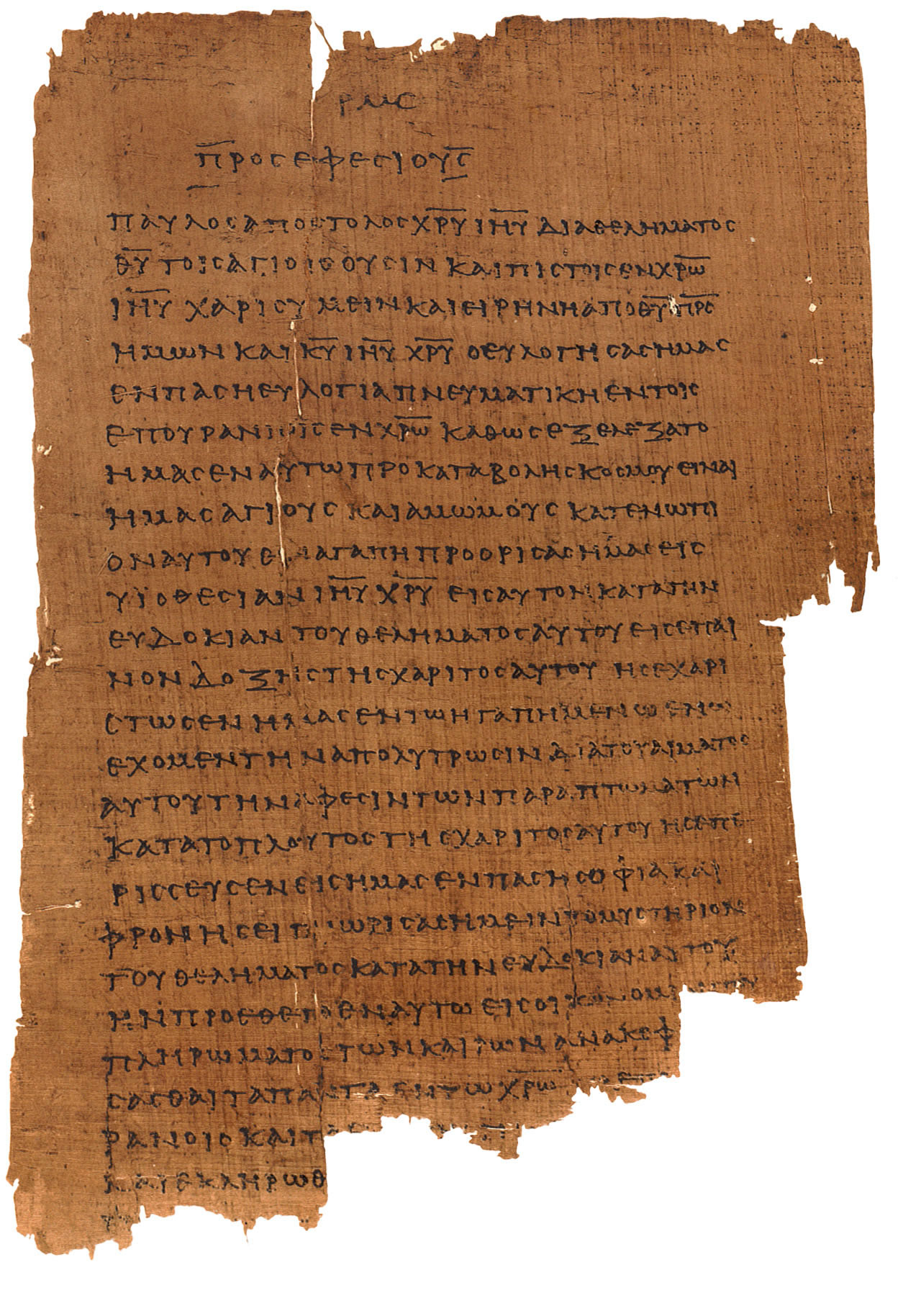
Ƿ46 Ephesians 1:1-11
The Laodiceans epistle sat 7th in the Marcionite collection. And in many ways this was the most challenging of any for me to attempt a reproduction, due both to its interwoven textual relationship with other epistles, notably Romans in the western text and Colossians, and the lack of an easy textual guide such as Swanson's to view textual variants which might be missing in the commentary of Metzger. On the plus side I found a few wonderful sites, one of which have the entire texts and plate, like the one to the right,  of P46 (along with other Papyrii) and another with Codex Sinaitiacus, and yet another for Codex Vaticanus. [1] But fortunately most of the analysis doesn't require delving into textual variants - and mind you many of those are simply transmission errors, of the sort we see in any manuscript - but instead focuses on the separation of Catholic elements from Marcionite in the unattested text; the goal being to arrived at a minimalist text that has extremely probability of actually being in the Marcionite version. The resulting text is striking and direct.

Tertullian, Adversus Marcionem 5.17.1, informs us straight out that Marcion's version of Ephesians with titled to the Laodiceans (ad Laodicenos).  What is more striking is that there was no address in the Marcionite version, exactly as we see in the picture provided of P46 nor in Codex Sinaiticus, Vaticanus (B), 1739, 424 nor miniscule 6,was any space left for an address, effectively shooting down the Lückenhypothese. However Tertullian suggests that Paul when writing to some was writing to all (cum ad omnes apostolus scripserit dum ad quosdam) does suggest the encyclical idea might be possible. But it seems more likely the author never gave an address, and all Marcion did was add Πρὸς Λαοδικέας as the superscription when the collection was put  together. This clearly shows Colossians 4:16 and the so-called Marcionite Latin Prologue to Colossians are dependent upon Laodiceans/Ephesians in Marcionite form.

Thursday, February 6, 2014

The Mystery of Mark, Part Three, Catholic Editor and/or Author

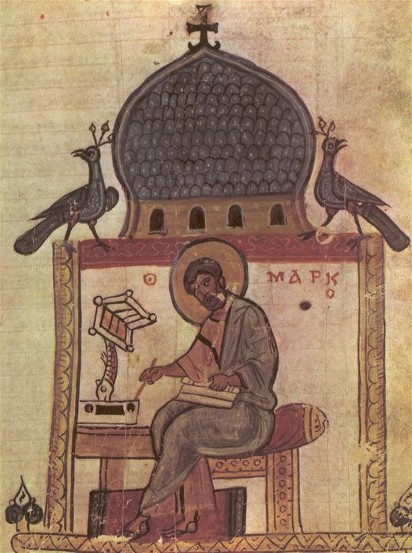
Mark, Slavonic Dobrylo Gospel (1164 CE)
With the completion of my cataloging the unique phrases in the Gospel of Mark I am able to get back to answering the questions about authorship, ending my article writing hiatus. I’d like to say my siesta was the result of the difficult work in compiling the list, but in truth the fault lies more in procrastination. But perhaps that is a good thing after all, as it gave me a chance to reflect and figure out how to present the true nature of the Gospel of Mark.

In compiling the unique phrases and words in Mark I found I had to differentiate between words which are basically a similar word found in another Gospel, which may have more to do with the voice Mark chose or other grammatical need and those which constitute an actual thought or fact which is unique in Mark. The latter are what we are examining here in the context of identifying finally the Catholic editor and the Author.

Thursday, October 24, 2013

The Minimalist Approach to Marcion

Genndy Tartakovsky's Minimalist Samarai Jack
While I on and off toil away with part two, the Catholic Editor, of my three part analysis of who wrote Mark, I came in conversation with David Inglis and came up with a quick topic that needs to be addressed concerning my Interlinear reconstructions of the Marcionite text. My interlinear reconstructions seem to baffle traditionalists, because I follow a minimalist approach, but in a way that turns their world view upside down. Like Genndy Tartakowsky's fantastic cartoon, in an effort to tell the cleanest story, everything that is not required is cut away, and what is left is the purest of pure forms. And I am extremely conservative in my approach, because I do not accept any uncertain assumptions. As with the image of Jack and Aku, there may be many detail items missing, and yet no clearer picture of these characters can be had.

Monday, September 30, 2013

Another Apocalypse from the Kitos Era?

In my last article on changing the title description I tackled the mini-Apocalypse from Luke. My placement of of the after the Tumulto Iudaico was in part based on the phrase, "People will rise up against People, and Kingdom against Kingdom" (Ἐγερθήσεται ἔθνος ἐπ' ἔθνος καὶ βασιλεία ἐπὶ βασιλείαν). Unfortunately in my analysis I forgot one important potential and even possible source for the phrase, the document known as 4 Ezra (Greek Προφήτης Εσδρας or Αποκάλυψις Εσδρα) has much the same phrases found in 2 Ezra 13:31 - the English and surviving Latin (Vulgate) below,
And they shall plan to make war against one another,
city against city, place against place, people against people, and kingdom against kingdom
et in alisalio cogitabunt bellare,
civitates civitatem et locus locum et gens ad gentem et regnum adversus regnum
There is a problem, in that this document is considered, and for very good reasons to be dated from about 100 CE, some 15 years  too early to be aware of either the Parthian War or the Tumulto Iudaico. So what is going on here, have I missed something?

Sunday, September 22, 2013

Changing the Blog Title Description to Post Kitos War

Every now and again in my studying the development of Christianity I stumble over some fact or event which over throws a good portion of the work I have done. It is extremely frustrating to face, but I like to think I am less pig headed and more scientific than most. I know certain so-called scholars will spend years attempting to belittle the evidence arrayed against their pet position, or end run it, rather than face the fact that much of their work is lost. For me, this happened in the mid-1990s and what I was doing was so off base I care not to even acknowledge it today. [1] But in the scientific model its all part of finding the truth. And so it is today that I conclude one of my blogs fundamental assumptions is wrong. Fortunately the impact is mostly to a couple charts and the description at the top of the page. Whatever else is simply a matter of adjusting a footnote here and a comment there, nothing to major.

Wednesday, September 18, 2013

Mystery of Mark, Part One Non-Priority

Mark, Echternach c. 690CE
Mark's non Priority:
The Gospel of Mark poses a difficult problem for me, as there is very little unique material in the book that can be ascribed to Mark. Only a baker’s dozen verses are unique to Mark, and beyond that only a small number of phrases and some individual words. And some of this unique material is most likely part of a later Catholic layer that all books of the New Testament seem to have.

When I look at the Synoptic Problem, the one Gospel which presents a problem is Mark. This may sound surprising, as the bulk of scholarship is focused on the so-called double tradition of Matthew and Luke, trying to explain their common which is in Mark, and thus have determined that Mark has priority. But this assumption is wrong, and leads you to some very bizarre conclusions. [1] The truth is something entirely different and quite surprising.

Saturday, August 31, 2013

The Votes Are In! The Next Topic: Who Wrote Mark?


Now from your voting it seems pretty clear you want me to write about the Gospel of Mark, where it fits and who wrote it. This is the most difficult and involved project of the choices, but  I accept the challenge.

The Gospel of Mark poses a unique problem for me, as there is very little unique material in the book that can be ascribed to Mark. Only a baker’s dozen verses are unique to Mark, and beyond that only a small number of phrases and some individual words. And some of this unique material is most likely part of a later Catholic layer that all books of the New Testament seem to have. As I write this I do not have the answers, and I think this will be a journey of discovery for all of us. I'll try to get the first  of what will probably be a two or three part work up before the Labor Day weekend is up. No promises however.