Showing posts with label Philippians. Show all posts

Sunday, August 18, 2013

Marcionite Philippians Interlinear and Notes

Chester Beatty p46 Philippians & Galatians
In the Marcionite Apostolikon Paul's Epistle to the Philippians is a rather minor book, less than half the size of the Catholic version in our bibles today. My reconstruction of Marcionite form, or rather Marcionite plus indeterminate verses, results in a mere 46 verses, and could have been much smaller, as 36 of these verses are not attested. I erred on the side of caution leaving in some questionable phrases and verse. The small size of Philippians suggests the the Marcionite Epistles were arraigned from largest to smallest, excepting Galatians which was the heralding letter giving the stamp of authority on the collection, much like the Catholic collection. But to arrive at that order, the Thessalonians have to be considered one letter, probably also the Corinthians.

Philippians is now the fifth book I have completed a reconstruction in Marcionite form. Although I have a much better handle on the specifics of the targets of the content and a better eye for the Catholic editor's themes and words, there were still several unique challenges faced in the reconstruction this book in Marcionite form. Unlike other books in Marcion's collection I have reviewed, Philippians has no additional attestation beyond Tertullian, and it is the last book that Tertullian looked at and may have skipped over more material than usual. Below I go over a  few interesting points.

Monday, July 15, 2013

Paul, Hadrian, Antoninus Pius, Circumcision, Roman Law, Torah Law, Desolating Sacrilege (Revised 8-22-13)

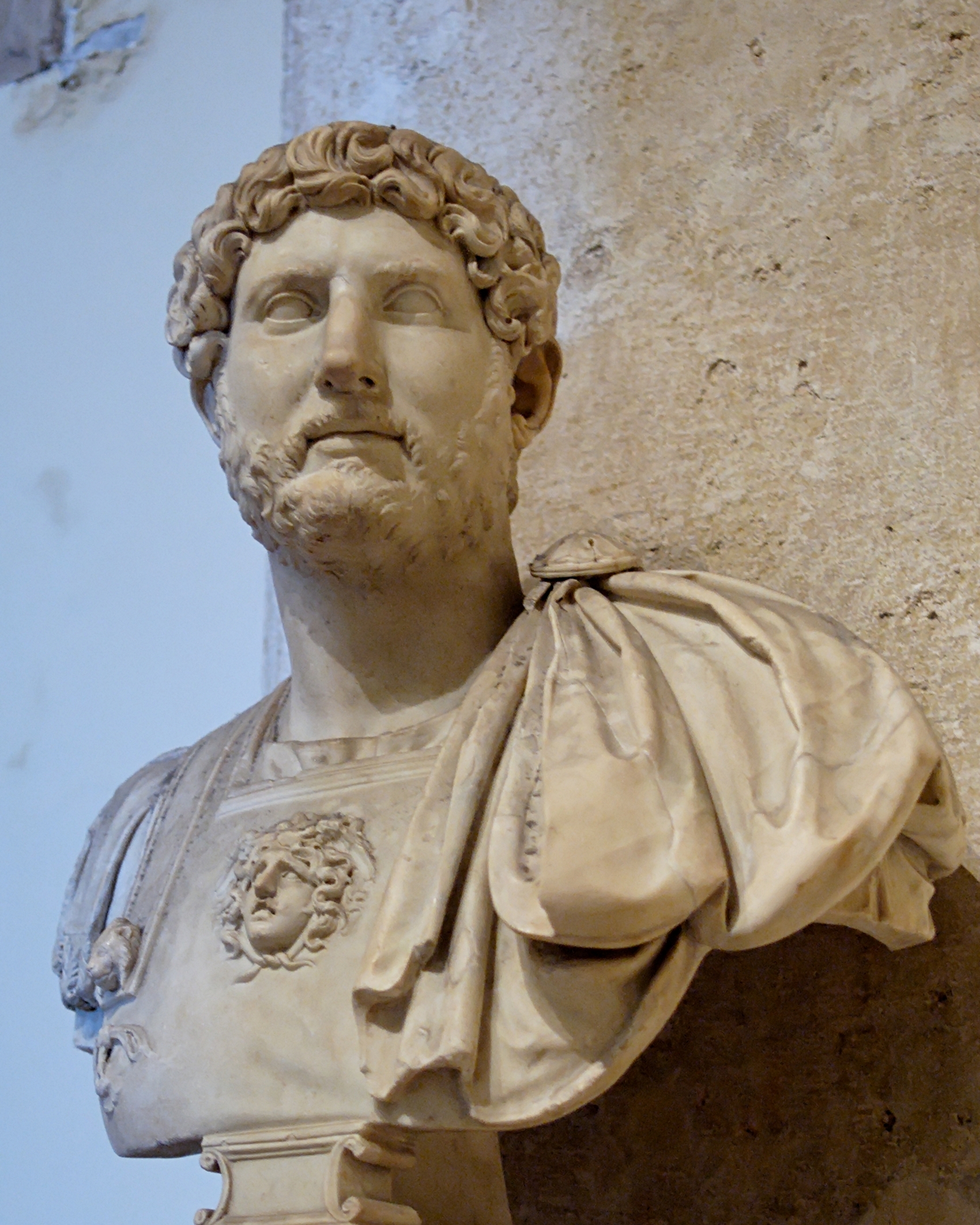
Hadrian, Emperor 117-138 CE
When Hadrian became Caesar in 117 CE it was under controversial circumstances, Historia Augusta 1.4, a rather gossipy work [1], paints the issue of his adoption by Trajan as something of a deathbed scandal. But the machinations described surrounding his ascension to the throne are consistent with the more reliable account of Cassius Dio Historiae Romanae 69.1 [2], which describes the murky circumstances under which he became Emperor. When taken in conjunction with his immediate decisions on the throne to extricate the Empire from Parthia, to reorganize the legions of the east, secure defensible borders, and put down rebellions in recently conquered territories, it looks for all the world to have been something of a consensus move by the powerful in the Military and the government. They wanted to correct the dangerously unsustainable expansionist policies of Trajan that were overtaxing the Empire and had led to the a quagmire in Mesopotamia, an expensive and failing campaign despite the propaganda. Hadrian was the man to do that job.

Monday, March 25, 2013

The Post-Marcionite Creeds (aka “the pre-Pauline creeds”)


No fallacy is more glaring than the 'consensus of most scholars'[1] that pre-Pauline creedal material is present the New Testament. And by being pre-Pauline, which assumes Paul is more than a literary character, and in fact is a contemporary of Jesus, his blinding conversion separated by less than a decade from his mission, these creeds therefore appear to be incorruptible evidence, coming within only months (a few years at most) of the crucifixion, and so demonstrate first beliefs of Christianity, and arguably the surety of its historical roots. This evidence seems to have been enough that Bart Erhman declared Adoptionism was likely the first form of Christianity, a conclusion that derives directly from the very nature of these creeds.

There are so many problems with this position that it’s can be confusing which weak point to attack first.