Every now and again in my studying the development of Christianity I stumble over some fact or event which over throws a good portion of the work I have done. It is extremely frustrating to face, but I like to think I am less pig headed and more scientific than most. I know certain so-called scholars will spend years attempting to belittle the evidence arrayed against their pet position, or end run it, rather than face the fact that much of their work is lost. For me, this happened in the mid-1990s and what I was doing was so off base I care not to even acknowledge it today. [1] But in the scientific model its all part of finding the truth. And so it is today that I conclude one of my blogs fundamental assumptions is wrong. Fortunately the impact is mostly to a couple charts and the description at the top of the page. Whatever else is simply a matter of adjusting a footnote here and a comment there, nothing to major.
Showing posts with label Luke. Show all posts
Showing posts with label Luke. Show all posts
Sunday, September 22, 2013


Saturday, July 27, 2013
Marcion's Revelation: The Eclipse of 118 CE
 |
| Hadrian Denarius 125-128 CE with Eclipse of 118 CE |
Monday, July 15, 2013
Paul, Hadrian, Antoninus Pius, Circumcision, Roman Law, Torah Law, Desolating Sacrilege (Revised 8-22-13)
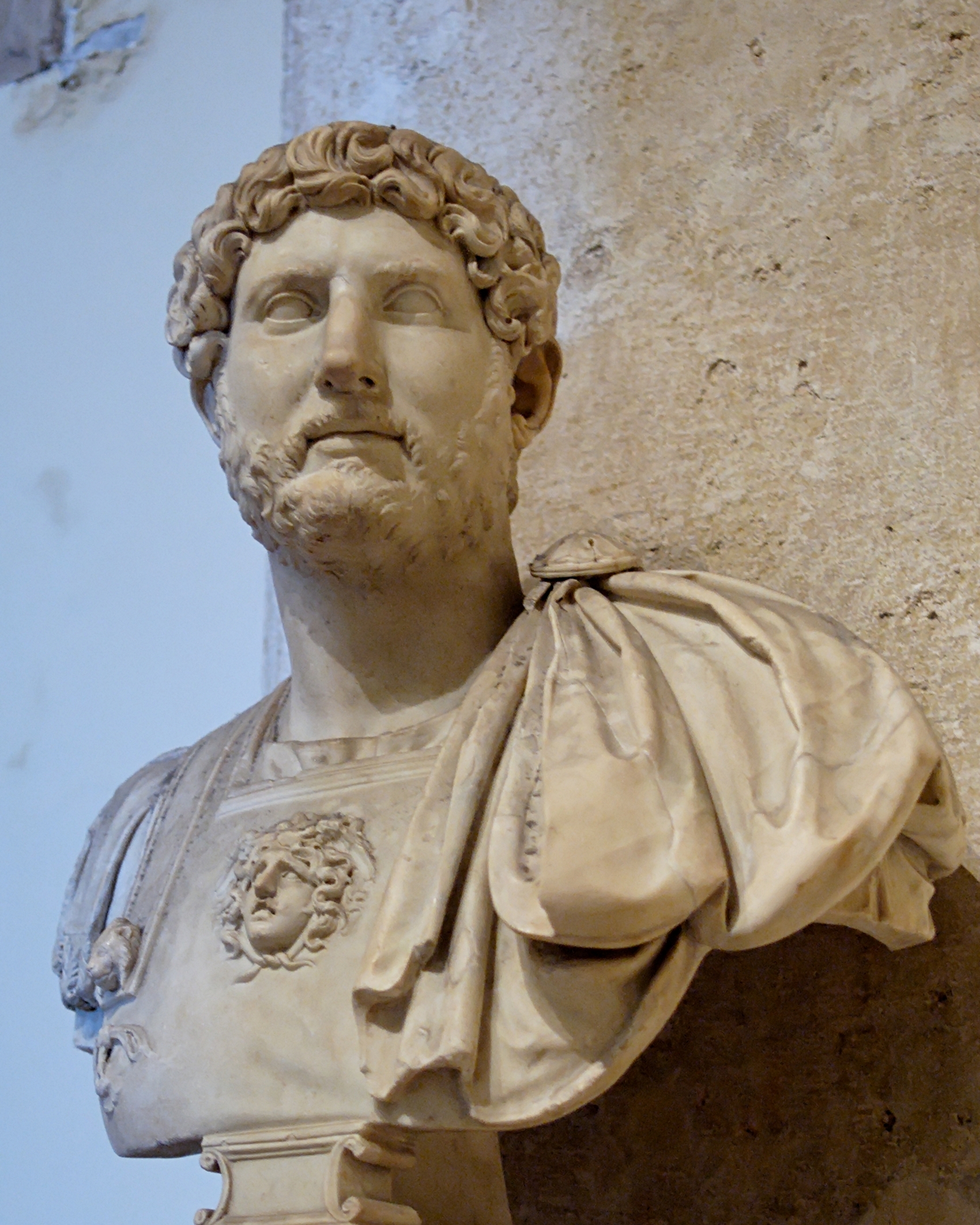 |
| Hadrian, Emperor 117-138 CE |
Wednesday, May 8, 2013
Vocabulary of Luke and Marcion: Commentary on John Knox (1942)
One of the most important books that should have upended Synoptic Study, and yet largely ignored, is John Knox's Marcion and the New Testament (1942). Although the work is largely nothing more than a serious of comments on others work, especially Harnack, with Knox adding nothing more than his opinion of various positions from the sophistry of their words, there is however a unique and important section worth keeping.
For the Gospel of Luke and Marcion's Gospel, Knox has undertaken to to study the vocabulary and try to establish the relationship of Marcion's Gospel and the Gospel of Luke. He developed a table of verses to help illustrate that I provide a link to.
Chapter 4 Marcion's Gospel and the Gospel of Luke is a lot more interesting, when Knox actually gathers evidence and takes a critical eye - lacking in his analysis of the epistles - to the Gospel. In Part III he calls out Sanday's analysis which underpinned the opinions of Burkett and Plummer, as well as paralleled in some sense Harnack's, who held that Marcion's Gospel was not prior to Luke.
For the Gospel of Luke and Marcion's Gospel, Knox has undertaken to to study the vocabulary and try to establish the relationship of Marcion's Gospel and the Gospel of Luke. He developed a table of verses to help illustrate that I provide a link to.
Chapter 4 Marcion's Gospel and the Gospel of Luke is a lot more interesting, when Knox actually gathers evidence and takes a critical eye - lacking in his analysis of the epistles - to the Gospel. In Part III he calls out Sanday's analysis which underpinned the opinions of Burkett and Plummer, as well as paralleled in some sense Harnack's, who held that Marcion's Gospel was not prior to Luke.
Subscribe to:
Posts (Atom)